

Driving & Parking in Spain
Most Spanish towns and cities have a real parking problem, especially in the busiest historic centres. In larger cities, parking is often regulated, time-limited or reserved for residents, so parking on the edge of the centre and continuing by public transport is often the easiest solution.
Motorway limit
120 km/h Main national limitUrban roads
30 or 50 km/h Depends on the street layoutCity parking
Usually zone-based Blue and green lines are commonLow-emission zones
Important in many cities Check before driving into the centre
 SPAIN: DRIVING & PARKING REGULATIONS
Driving in Spain is usually straightforward between cities, but city-centre parking can be difficult and expensive. The closer you get to the busiest districts, the more likely it is that parking will be regulated, limited or reserved for local residents.
Historic centres are rarely the best place to drive into
In many Spanish cities, the old centre is the hardest place to park. A garage or an outer parking option usually works much better than searching for a random street space.
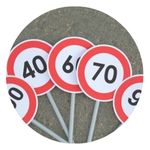
Speed limits
Spain’s general speed limits are clear, but urban roads now depend more on the street layout than they used to. Roads with a single lane in each direction are generally limited to 30 km/h, while broader urban roads can still be 50 km/h.
| Road type | Speed limit |
|---|---|
| Urban roads with one lane each way | 30 km/h |
| Urban roads with two or more lanes each way | 50 km/h |
| Regional and conventional roads | 90 km/h |
| Motorways | 120 km/h |
Urban speed rules changed nationally
Older advice that says all urban roads are simply 50 km/h is no longer reliable. In many Spanish streets, the default urban limit is now 30 km/h.
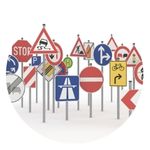
Parking regulations
Paid on-street parking is common in Spanish cities, but the exact hours, tariffs and maximum stay vary by municipality. In many cities, regulated parking applies on weekdays and often part of Saturday, while Sundays are easier, though you should always check the local signs.
- Parking on pavements, promenades and loading areas is forbidden
- Green lines usually indicate resident parking or resident-priority parking
- Blue lines usually indicate paid public parking
- White lines usually indicate unrestricted free parking, unless local signs say otherwise
- Yellow markings usually indicate parking restrictions or prohibition, not general visitor parking
Do not rely on one national parking timetable
In Spain, parking colour systems are common, but the actual paid hours and stay limits are local. Always read the sign on the street or parking meter.
Low-emission zones in Spain
One of the biggest practical changes for drivers in Spain is the expansion of low-emission zones. In many larger cities, the centre is now more restricted for older or higher-emission vehicles.
In practice, this matters most if you want to drive into the centre of a larger city. Madrid and Barcelona are the best-known examples, but this is no longer just a two-city issue.
Check the city before you drive in
If you are visiting a larger Spanish city, it is worth checking whether the centre is inside a low-emission zone before you arrive.
Parking for drivers with disabilities

With a European Union Disabled Parking Permit, you may use designated disabled parking spaces in Spanish cities. Local rules still matter, but in many towns and cities parking for Blue Badge holders is free or more flexible than normal parking.
Cities in Spain
Car parking in Madrid
Madrid is one of the most regulated parking cities in Spain. A planned garage or edge-of-centre parking option is usually much easier than relying on on-street parking.
Car parking in Barcelona
Barcelona combines heavy visitor demand with dense parking controls, so a garage or outer parking option usually works best.
Car parking in Valencia
Valencia is easier than Madrid or Barcelona, but the centre still works best if you choose a proper parking facility in advance.
Car parking in Seville
Seville has a busy historic centre with narrow streets, so central parking is much easier if you use a garage or official parking area.
Car parking in Malaga
Malaga combines a coastal location with a busy centre, so parking demand rises quickly in the most visited areas.
Car parking in Murcia
Murcia is generally more manageable than the biggest Spanish cities, but a central car park is still usually the easiest option.
Car parking in Alicante
Alicante is popular in summer, and central parking can become difficult, especially near the busiest visitor areas.
Car parking in Bilbao
Bilbao is a busy city where a garage or marked city parking area is usually easier than relying on the street.
Car parking in Cadiz
Cadiz is one of those cities where parking outside the historic centre and walking in is often the smartest option.
Car parking in Figueres
Figueres is easier than Barcelona, but visitor demand around the main attractions still makes a planned parking choice worthwhile.
Car parking in Granada
Granada’s historic layout makes central driving less practical than it first looks, so a marked parking facility is usually the best option.
Car parking in Marbella
Marbella becomes much busier in peak season, so parking close to the centre or beach can be difficult.
Car parking in Salamanca
Salamanca is compact and historic, which makes outer-centre parking usually easier than driving into the tightest core.
Car parking in San Sebastian
San Sebastian is popular and compact, so beach and centre parking can fill up quickly in peak periods.
Car parking in Toledo
Toledo is one of the clearest examples of a city where it is best to park outside the old centre and continue on foot.
Car parking in Valladolid
Valladolid is generally manageable by car, but central parking still works best if you choose a proper city parking area.